
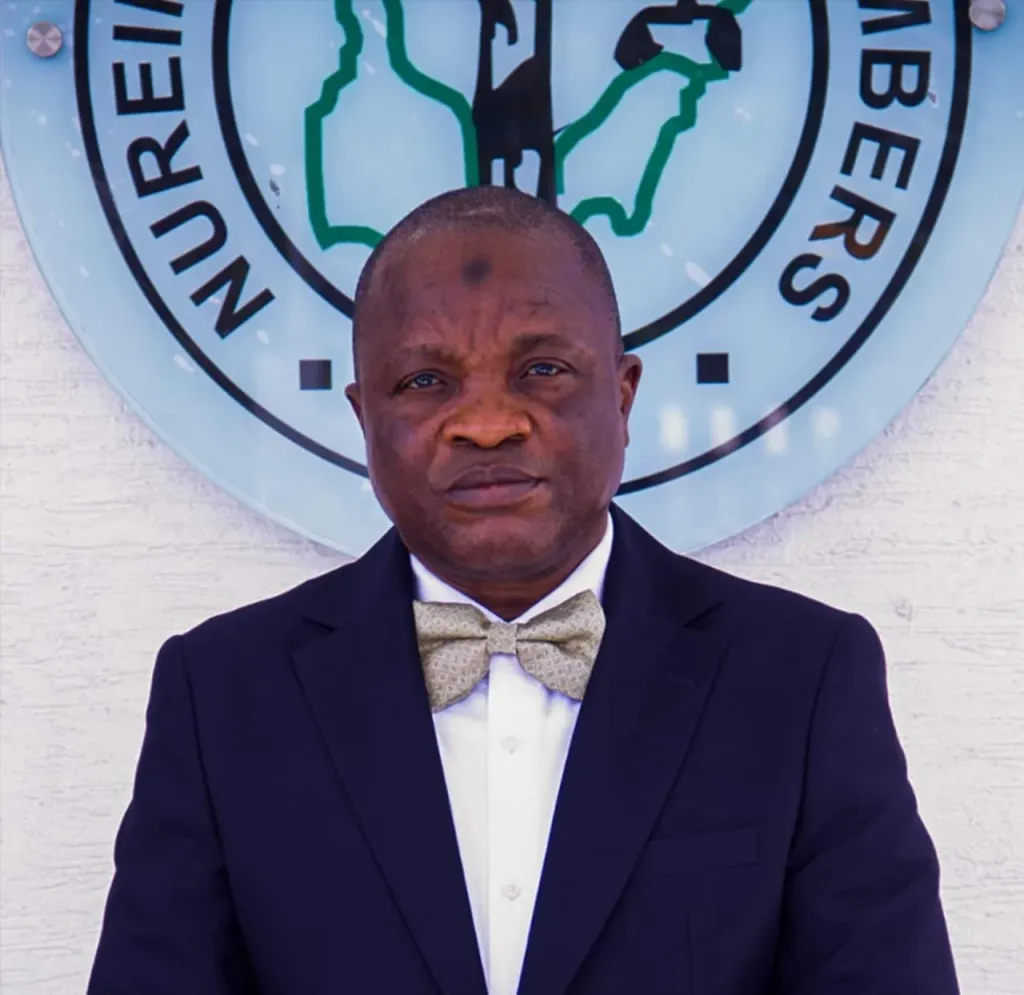
A Senior Advocate of Nigeria, Aare Nureini Jimoh, SAN, has challenged the Nigerian judiciary to confront systemic barriers denying ordinary citizens access to justice, warning that a justice system that excludes the poor, persons with disabilities and other vulnerable groups falls short of its constitutional mandate.
Jimoh gave the charge in a paper titled “Building an Inclusive Justice Sector,” presented at the 2026 conference of the National Association of Women Judges in Nigeria (NAWJN), held in Ibadan, Oyo State.
The legal luminary argued that access to justice must go beyond the existence
of courts and laws to encompass the ability of every citizen to enter courtrooms, be heard, obtain timely decisions and receive equal treatment under the law.
He identified poverty, prolonged pretrial detention, inaccessible court facilities, gender-based discrimination, judicial intimidation and delays in court proceedings as major obstacles undermining the delivery of justice in Nigeria.
Using five illustrations involving a lawyer with a disability, an indigent detainee, a man awaiting trial, a woman judge facing questions over her state of origin and a judge confronted by armed security operatives, Jimoh posed a fundamental question: “Who is the justice sector built for?”
According to him, an inclusive justice system must ensure that everyone who needs justice can access it, that their cases are determined within a reasonable time and that those who work within the system can advance in their careers in safety and dignity.
“My submission is that building such a sector is not charity. It is the very meaning of justice,” he said.
Jimoh expressed concern over Nigeria’s high number of awaiting-trial inmates, citing figures presented by the Nigerian Correctional Service to the House of Representatives on February 9, 2026.
According to the figures he quoted, the country had a total inmate population of 80,812, comprising 51,955 awaiting-trial inmates, 24,913 convicted persons and 3,850 inmates in other categories.
He observed that awaiting-trial inmates accounted for approximately 64 per cent of the total population, raising serious questions about the practical protection of the constitutional presumption of innocence.
The SAN argued that many detainees remained in custody because they could not afford legal representation, were unaware of available legal aid services or had become victims of administrative failures within the criminal justice system.
He also highlighted the financial implications of prolonged detention, estimating that feeding 51,955 awaiting-trial inmates at ₦1,125 per person daily would cost approximately ₦58 million each day, or about ₦21 billion annually.
Jimoh stressed that the calculation was his own estimate based on the figures cited, but maintained that it demonstrated the economic cost of a justice system unable to determine cases promptly.
“We have good laws on paper; what is missing is people, money and information,” he said, pointing to inadequate funding, insufficient legal aid personnel and limited public awareness of available legal assistance.
He called for stronger pro bono services, expanded law clinics, community-based paralegal support and regular visits by Chief Judges to custodial centres to identify inmates who had been unlawfully or unnecessarily detained.
To illustrate the consequences of delayed trials, Jimoh recounted cases in which detainees allegedly spent years in custody without their cases being properly prosecuted.
He cited the case of Friday Okoro, who, according to the paper, had spent more than three years in custody in Ikot Ekpene over an allegation involving the theft of his cousin’s coconuts before he was among inmates released during a custodial-centre visit by the Chief Judge of Akwa Ibom State, Justice Ekaette Obot, in March 2025.
He also referred to Emediong Friday, whom he said had been detained for five years without being charged to court before Justice Obot intervened.
Other examples included inmates released in Edo and Kwara States after prolonged detention, missing case files or the absence of sufficient grounds to continue their prosecution.
The SAN argued that such cases revealed a troubling pattern in which individuals who were physically and mentally fit to stand trial remained incarcerated because prosecutors were absent, files could not be located, charges were not filed or court dates were repeatedly adjourned.
He warned that prolonged detention could destroy livelihoods, separate families and permanently damage the reputation of people who might eventually be discharged or acquitted.
“In practice, the presumption of innocence becomes a presumption of detention,” he observed.
He urged judicial officers and other criminal justice stakeholders to ensure that case files were properly tracked, charges were filed within reasonable timelines, adjournments were justified and every awaiting-trial inmate knew when the next hearing would take place.
Jimoh also criticised the continued inaccessibility of court facilities to persons with disabilities, despite the enactment of the Discrimination Against Persons with Disabilities (Prohibition) Act.
He recalled concerns raised by the Association of Lawyers with Disabilities in Nigeria over courtrooms without ramps or lifts, the absence of sign-language interpreters and the lack of accessible materials for blind litigants and legal practitioners.
He described the situation as particularly troubling where lawyers who had overcome significant challenges to obtain legal qualifications were subsequently confronted with physical barriers that prevented them from effectively practising their profession.
“If the temple of justice cannot be entered by its own priests, how will the ordinary person with a disability trust it?” he asked.
However, he acknowledged steps taken to improve accessibility, including the nomination of Mrs Nkem Akpuoye as the first Disability Desk Officer of the FCT High Court in 2021 and initiatives within the Nigerian Bar Association aimed at improving access for lawyers with disabilities.
Jimoh called for more accessible court buildings, sign-language interpretation, disability desks and court information provided in formats that persons with disabilities could use.
He maintained that accessibility should be treated as a fundamental requirement of justice delivery rather than an act of goodwill.
Addressing gender inclusion, the SAN examined cases involving women judges whose appointments or career progression had been challenged on grounds relating to their state of origin or marital status.
He cited the controversy surrounding Justice Ifeoma Jombo-Ofo’s elevation to the Court of Appeal in 2012, following questions about her state of origin after she married a man from another state.
He also discussed the controversy over the confirmation of Justice Akon Ikpeme as Chief Judge of Cross River State and the eventual resolution of the dispute in her favour.
Jimoh further referenced the Supreme Court’s decision in Ukeje v Ukeje, which invalidated a customary rule that discriminated against female children in the inheritance of their father’s estate.
He argued that these cases demonstrated how institutional practices and discriminatory customs could obstruct equal treatment, even where constitutional protections existed.
The SAN acknowledged progress in women’s representation in judicial and legal leadership, citing the emergence of women in senior positions within the judiciary, the Nigerian Law School and the Nigerian Bar Association.
However, he expressed concern over the comparatively low representation of women among Senior Advocates of Nigeria and state Attorneys-General, urging greater transparency in appointment and elevation processes.
He called for the publication of gender-disaggregated statistics on applicants and successful candidates to help identify potential barriers to equal opportunity.
According to him, the door to leadership had opened for women, but progress remained slow and uneven.
In one of the paper’s strongest arguments, Jimoh warned that judicial independence must be protected against intimidation, political interference and arbitrary actions by security agencies.
He revisited the October 2016 raids on the residences of judicial officers by operatives of the Department of State Services, noting that the National Judicial Council had condemned the operations as an attack on judicial independence.
He was careful, however, to distinguish the need for accountability from the obligation to respect due process, arguing that allegations of judicial misconduct must be investigated fairly while judges must remain protected from intimidation and baseless accusations.
“Accountability is right,” he said, adding that judges found guilty of misconduct should be disciplined through established procedures.
He equally insisted that judicial officers were entitled to the presumption of innocence and fair treatment when allegations were made against them.
Jimoh also drew attention to the welfare of judicial officers, arguing that inadequate remuneration and unsafe working conditions could expose judges to undue pressure and undermine public confidence.
“A judge who cannot live decently on his pay is more exposed to pressure than one who can, and the public pays the price,” he stated.
He maintained that judicial independence required more than constitutional provisions, insisting that judges must enjoy secure tenure, adequate remuneration and protection against arbitrary interference.
Jimoh identified the enforcement of fundamental rights against government institutions and security agencies as a critical test of the Nigerian justice system.
He referred to the constitutional guarantees of personal liberty, dignity and fair hearing, as well as the right of persons whose fundamental rights had been violated to approach the High Court for redress.
The SAN expressed concern that some litigants and lawyers believed judges could be reluctant to rule against powerful government institutions because of fears of possible repercussions, including transfers, stalled promotions or investigations.
While acknowledging that the extent of such fears was difficult to measure, he warned that the perception alone could damage public confidence in the judiciary.
He cited the 2016 judgment of Justice Gabriel Kolawole of the Federal High Court in Abuja ordering the release of Sheikh Ibrahim El-Zakzaky and his wife from custody within 45 days and awarding compensation against the State Security Service.
According to Jimoh, the continued detention of the couple beyond the court-ordered deadline illustrated the problem of judicial decisions that are not promptly obeyed by public authorities.
He also highlighted more recent fundamental rights decisions, including a reported ₦10 million compensation award in Jigawa State over prolonged detention, a ₦300 million award against the police by a High Court in Delta State and a ₦12 million award to a journalist in the Federal Capital Territory.
The SAN argued that judicial courage must be supported by institutional protection and respect for court orders.
He also warned against discrepancies between judgments delivered in open court and the enrolled orders subsequently prepared for enforcement, stressing that the formal court record must accurately reflect the decision pronounced by the judge.
“A right that cannot be enforced against the powerful is not a right but a request,” he declared.
Jimoh acknowledged the potential of technology to improve access to justice through virtual hearings, electronic filing, electronic service and digital case management.
He noted that such tools could reduce travel costs, improve access for litigants in remote communities and enable persons with disabilities to participate more effectively in proceedings.
However, he cautioned that poorly functioning electronic filing systems could undermine the very objectives they were designed to achieve.
He raised concerns about slow responses to filing errors and delays in correcting mistakes, warning that such administrative problems could cause litigants to suffer unnecessary setbacks.
The SAN urged judicial authorities to ensure that digital systems were responsive, accessible and supported by effective mechanisms for resolving technical problems.
He maintained that technological innovation should complement, rather than complicate, access to justice.
In outlining reforms, Jimoh called on the judiciary to improve punctuality, reduce unnecessary adjournments, strengthen case management and conduct regular custodial-centre visits.
He also advocated accessible court buildings, interpreters, disability desks, plain-language forms and the use of remote hearings where appropriate.
He urged women judges, in particular, to mentor younger lawyers, promote equal opportunity, demonstrate courage in the enforcement of rights and maintain impartiality in deciding cases.
He stressed that inclusion should not be interpreted as preferential treatment for any gender but as a commitment to fairness, merit and equal protection.
“The best case for inclusion is a Bench, led by men and women alike, that is fast, fair, brave and open,” he said.
Jimoh returned to the individuals whose experiences framed his address: the lawyer unable to enter a courtroom, the detainee without legal representation, the man waiting years for trial, the woman judge facing institutional barriers and the judicial officer vulnerable to intimidation.
He argued that none of them was asking for special treatment, but simply for the constitutional promise of freedom, equality and justice to be upheld.
Invoking the principle that justice must not be denied or delayed, he urged stakeholders to build a system in which citizens could access courts, be heard promptly and obtain remedies without discrimination or fear.
Jimoh maintained that a justice sector designed to protect everyone, irrespective of wealth, disability, gender or position in society, would ultimately strengthen public confidence in the judiciary and the rule of law.
READ THE FULL PAPER BELOW
Building An Inclusive Justice Sector
A Paper Presented By
Aare NUREINI JIMOH, SAN; FCArb, Ficmc
Aare Bamoofin of Ibadan land
AT THE NATIONAL ASSOCIATION OF WOMEN JUDGES IN NIGERIA
(NAWJN) CONFERENCE, 2026
HELD IN IBADAN, OYO STATE, NIGERIA.
Building an Inclusive Justice Sector
- Protocols
Let me begin by creating in our mind some pictures that will shape and guide our understanding of the topic to be discussed today: “Building an Inclusive Justice Sector”
Firstly: A lawyer arrives at court on the morning of a hearing. He has prepared his brief, he knows the law, has a client waiting, but he uses a wheelchair, and the courtroom is at the top of a flight of steps; there is no ramp and no lift. What happens next has been described by the Association of Lawyers with Disabilities in Nigeria, known as ALDIN. Its members say that lawyers and litigants in wheelchairs can reach most courtrooms only by crawling on the floor, or by being carried in the arms of others, like babies. And a deaf lawyer, they add, will often find that no sign language interpreter is provided.
Secondly: In a Custodial Centre not far from that Court, a man has been held for years, he has not been convicted of anything, he cannot afford a lawyer, and nobody has told him that legal aid exists.
Thirdly: Another man is in the same centre, but there is nothing wrong with him. He is healthy, strong and perfectly able to stand trial. He has asked for nothing except a date in court, and yet he waits, because the file cannot be found, or the prosecutor is not ready, or the case has been adjourned again.
Fourthly: A woman judge, with fourteen years of service, is told that she cannot take her place in the Court of Appeal because her husband comes from another State.
Fifthly: It is 1 O’clock in the morning. A judge is asleep in his official quarters when armed and masked men arrive at the gate.
These are cases of five different people, in five different situations. A lawyer with a disability; a poor detainee; a fit man waiting for a trial, a woman judge and a male judge. And one question runs through all of them: who is the justice sector built for?
That is the question we are meant to answer today. A justice sector is inclusive when everyone who needs it can get in, can be heard and understood, can have their case dealt with in good time, and, if they work in it, can rise and work in safety and dignity. My submission is that building such a sector is not charity. It is the very meaning of justice.
- Theoretical understanding of the words “justice sector” and “inclusive”
Let me define my terms in plain words, so that we are all speaking about the same thing.
The justice sector is much wider than the courts, it includes the police or other security agencies who receive complaints, the prosecutors who decide what goes to court, the lawyers who speak for people, the Legal Aid Council, the customary and Sharia courts, the High Courts and the appellate courts, the correctional service, the law schools that train us, and the Bar that regulates us.
Inclusive means that this whole system has doors that open for everyone. I find it helpful to think of three kinds of door in this circumstances that could best demonstrate this.
- The door in: can everyone enter this door? The poor, women, persons with disabilities, those who speak other languages, those in villages far from any court.
- The door of understanding: once inside, can everyone be heard and understood, treated equally, and given a fair outcome?
- The door upward: for those who work in the sector, such as judges, lawyers and staff, can everyone rise by merit, whatever their sex, disability or State of origin?
I will walk us through the system with above pictures painted and these three doors in mind.
- Guiding ideas
The preamble to our Constitution speaks of building a nation “on the principles of freedom, equality and justice”. And section 17(2) (e) says that the independence, impartiality and integrity of the courts, and “easy accessibility” to them, shall be secured and maintained. That is our national promise. An inclusive justice sector is simply that promise kept.
The philosopher John Rawls proposed a thought experiment for the inclusivity and posited: Imagine you are asked to design the rules of the courts. But you do not know what place you will hold in society. You do not know if you will be rich or poor, a man or a woman, able-bodied or disabled, from the majority or from the minority. What kind of court would you build? Rawls believed that we would build one that is fair to everyone, because any one of us might be the person standing at the foot of those steps. He called justice “the first virtue of social institutions”.
Lord Hewart said that justice must not only be done but be seen to be done. A court that cannot be entered by some, or understood by some, or trusted by some, fails the second half of that sentence.
In many African languages, there is a thought that we call Ubuntu: a person is a person through other people. A justice system that shuts out one person diminishes everyone in it.
Dr Martin Luther King wrote: “Injustice anywhere is a threat to justice everywhere.” That is why we cannot say that exclusion is somebody else’s problem. It weakens the whole system.
- Access for the poor
On 9th February 2026, the Nigerian Correctional Service told the House of Representatives that the total inmate population was 80,812. Of these, 51,955 were awaiting trial, 24,913 had been convicted, and 3,850 were in other categories. That means that 64 percent of the people held in our custodial centres have not been convicted of anything. In Akwa Ibom State, the Correctional Service reported earlier, 2,413 of 2,854 inmates were awaiting trial.
We should all think about what that means. These are people who are, in law, presumed innocent. Many are poor, many do not understand what is happening to them. A few may have been forgotten.
The Correctional Service has said that it spends about ₦1,125 a day to feed each inmate. If we multiply that by 51,955 awaiting-trial inmates, the feeding bill comes to roughly ₦58 million every day, or about ₦21 billion a year. This is my own arithmetic from the service’s figures, this is just an estimate. But the point is clear: exclusion is expensive. A State that cannot afford to try people quickly ends up paying to feed people it has not tried.
The Constitution gives every accused person the right to a lawyer of his choice, adequate time and facilities to prepare a defence, and a free interpreter if he does not understand the language of the court (section 36(6)). The Administration of Criminal Justice Act 2015 was passed to speed up trials, widen bail and reduce needless detention. The Legal Aid Act 2011 set up the Legal Aid Council to help those who cannot afford a lawyer, yet, the adequate dispensation of inclusive justice remain a mystery.
Reports on legal aid in Nigeria say the same things again and again. The Council has too few lawyers for the whole country, funding is poor, and the public does not know the service exists. The Act’s means test is tied to the national minimum wage. Some arrestees, including those charged with certain drug offences, have reportedly been left out by the Act’s scope. The Council also says that the Access to Justice Fund, provided for in section 9 of the Act, was yet to be funded.
So here is a hard truth; we have good laws on paper, what is missing is people, money and information.
Pro bono work should not be an occasional favour, it should be an expectation, as ordinary as filing a process. Law clinics in our faculties, paralegals in communities and Chief Judges who visit custodial centres and release those unjustly held can all make the first door wider. Therefore, a justice sector that works only for those who can pay is a market, not a justice sector.
So far I have spoken of people who face an obstacle of money or of the body. But there is another group that we often forget. They are the people who are fit, able and ready, and who still suffer injustice. Their problem is not poverty or disability. Their problem is time.
Let me paint the picture again, more slowly.
Imagine a man in his prime, he is in good health, his mind is clear, he has not been found unfit to plead, and nothing about him stops him from standing in the dock tomorrow. Say he is charged with a minor offence. He wants only one thing: to stand before a judge, say “I am innocent” or “I am sorry”, and hear the decision. He is ready; but the system is not ready for him. The police have not completed their file, or the file has been misplaced, or the prosecutor is absent, or there is no vehicle to bring him from the custodial centre, or the judge is away, and the case is adjourned. Weeks turn into months; months turn into years. He is healthy, he is willing, and he is still waiting.
That is not an imagined picture, it is what majority of our Chief Judges have found when they visit custodial centres. Some of the narrated examples are;
- The man who stole coconuts: In March 2025, the Chief Judge of Akwa Ibom State, Justice Ekaette Obot, spent three days visiting the State’s custodial centres and freed 55 inmates. She observed that most had committed minor offences and had stayed longer than they would have if they had been convicted. A typical case was that of Friday Okoro in the Ikot Ekpene centre, who had been held for over three years, without trial, for stealing his cousin’s coconuts.
- Five years without a charge: On a Christmas-season visit to the same centre, the same Chief Judge found another man, Emediong Friday, who had been held for five years without being charged to court. She asked the prosecutor for a reason why he should remain in custody, and none was given. She freed him.
- Files that cannot be found: In Edo State, Chief Judge Justice Daniel Okungbowa freed four inmates because they had been held without their files being traced. The next day he freed a 20-year-old, held on an allegation of kidnapping since December 2023, after the State’s Director of Public Prosecutions advised that there was no case to answer.
- In Kwara: On 1st and 2nd December 2025, the Chief Judge of Kwara State, Justice Abiodun Adebara, visited the old Ilorin custodial centre at Okekura and the new one at Mandala and released 16 inmates. They included people held for long periods without trial, people with health problems, and people against whom no credible charge had been found. He called on all the actors in the justice system to handle criminal cases with greater diligence.
- In Kano: Chief Judge Dije Abdu Aboki reviewed the cases of 82 inmates, some of whom had spent several years in custody without formal charges, and ordered seven released on medical grounds.
Look at what these stories have in common; Nobody in them was unfit to stand trial, they were fit, they were ready, and they were waiting for a system that was not. The cause was not wickedness. It was missing files, unfiled charges, absent prosecutors and slow dates.
We can all imagine what the waiting costs. A man who is held for three years is a man who may lose his job, his home, his place at school, and his standing with his family. If he is later found innocent, nothing can give him those years back. In practice, the presumption of innocence becomes a presumption of detention.
The same is true outside the criminal court; A fit and ready litigant in a civil case can wait just as long. At the opening of the Federal High Court’s legal year in December 2025, the Court was reported to have 165,905 pending cases, and the NBA President, Mr Afam Osigwe, described the unpredictability of court sittings as a deeply distressing frustration for litigants and lawyers.
Eight hundred years ago, the Magna Carta put the promise in one line: “To no one will we sell, to no one deny or delay right or justice.”
- What we can do.
Chief Judges should continue to visit custodial centres regularly, and not only at Christmas. Courts should keep case files in a way that can be tracked. Police and prosecutors should be held to deadlines for filing charges. Adjournments should be reasoned and short. And every awaiting-trial inmate should know the date of the next hearing. Therefore, the person who is fit and ready should not have to wait for a justice system that is not.
- Persons With Disabilities
Let me return to the lawyer at the foot of the steps. The Discrimination Against Persons with Disabilities (Prohibition) Act was passed in 2018 and signed into law in January 2019. Among other things, it requires public buildings to be accessible. Courts are public buildings. Yet as at 2019 Association of Lawyers with Disabilities in Nigeria (ALDIN) was telling the nation that courtrooms were inaccessible, that there were no Braille or tactile materials for the blind, and that there were no sign language interpreters for the deaf. Its president, Barrister Daniel Onwe, pointed out something painful: that persons with disabilities who have taken their destinies in their own hands, gone to school and trained as lawyers, can face “a brick wall” in the profession. Think about what that does to public confidence; if the temple of justice cannot be entered by its own priests, how will the ordinary person with a disability trust it?
But the picture is not only bleak, and I want to give credit where it is due.
- In June 2021, the Chief Judge of the Federal Capital Territory, Justice S. Garba, nominated Mrs Nkem Akpuoye as the first Disability Desk Officer of the FCT High Court. Her job is to be the liaison for persons with disabilities: arranging sign language interpreters where needed, making court information available in accessible formats, and helping to apply disability law in the court.
- Around the same time, the then NBA President, Olumide Akpata, raised a proposal at the NBA’s National Executive Council to create a Section on Disability Law.
- The Nigerian Bar Association’s headquarters was adjusted to allow access, and some lawyers with disabilities were sponsored to attend the NBA’s Annual Conferences in 2017 and 2018.
These are modest steps, but they show that it is possible. A single order from a Chief Judge can create a Disability Desk. A single practice direction can allow an interpreter into court.
Therefore, if a court cannot be entered, it is not a court for everyone.
- Women, on the Bench And At The Bar
This is a subject on which I need not speak at length today, since there are others better placed to speak on it. But it would be strange to speak of an inclusive justice sector and leave it out. Let me give four short stories.
In November 2012, the swearing-in of Justice Ifeoma Jombo-Ofo as a Justice of the Court of Appeal was suspended after a petition said that she was not truly from Abia State, because she was born in Anambra and belonged to Abia only by marriage. The Senate urged that she be sworn in. The National Judicial Council then settled the matter, relying on the Federal Character rule that a married woman continues to claim her State of origin. She was sworn in. The lesson is about structures, not individuals: a question about married women judges had no settled answer until a petition forced one.
In Cross River State in 2020, the House of Assembly declined to confirm Justice Akon Ikpeme, the most senior judge, as Chief Judge. It said she came from Akwa Ibom and was a “security risk”, though she is married to a man from Cross River. The State went about thirteen months without a substantive Chief Judge. The National Judicial Council insisted on seniority, and in early 2021 she was confirmed. In the very same month of March 2020, Imo State swore in Justice Ijeoma Agugua, who was born in Anambra and is married to an Imo man, as its first woman acting Chief Judge. Same situation, two outcomes. That tells us exclusion is not inevitable. It is a choice.
Lazarus Ukeje died in 1981 without a will. His daughter Gladys feared that she would lose her share because she was a woman. The Supreme Court decided the case in April 2014, in Ukeje v Ukeje, and held that a customary rule denying a female child a share in her father’s estate breaches section 42 of the Constitution. Thirty-three years. There is an old saying that justice delayed is justice denied.
In 2009 Justice Raliat Elelu-Habeeb, Chief Judge of Kwara State, was removed by the then Governor with the State House of Assembly. She took the matter to court, and in February 2012 a seven-member panel of the Supreme Court reinstated her, holding that the first port of call for any such removal must be the National Judicial Council. The decision protects every Chief Judge in Nigeria, men and women alike.
And there is good news. In January 2026, Dr Olugbemisola Odusote became the first woman Director-General of the Nigerian Law School since it was established in 1962. In July 2026, Mrs Oyinkansola Badejo-Okusanya, SAN, was elected NBA President. Justice Kudirat Kekere-Ekun is the Chief Justice of Nigeria, the second woman in that office. Women now lead High Courts in several States, including Akwa-Ibom, Adamawa, Bauchi, Gombe, Kano, Nasarawa, Niger, Ogun, Oyo, Zamfara, and the Court of Appeal.
But the numbers show how much remains. Women were about 28.5% of Supreme Court Justices as at today (6 Female Justices), About 27% and 37.21% for both Court of Appeal and Federal High Court respectively, about About 33% for the States High Courts, 4% Female Senior Advocates of Nigeria, and only 4 of 37 State Attorneys-General are women. I raise the Senior Advocate figures with respect and in the Bar’s own house, since a rank is a doorway upward. A transparent, published breakdown of applicants and awards by gender would help us all to understand where the barriers lie.
It is saves to say for our women judges and lawyers that the door is actually opening, but it opens slowly and mostly from the top.
8.0 Justice for those who give justice
An inclusive sector includes those who work inside it, and that includes judges, men and women alike. It would be a strange kind of inclusion that protected everyone except the people who protect everyone else. Let me go back to the fifth earlier picture painted.
In the early hours of 8th October 2016, officers of the Department of State Services raided the homes of several judges. Two Justices of the Supreme Court, Justices Sylvester Ngwuta and Inyang Okoro, and Justice Adeniyi Ademola of the Federal High Court were among those arrested, and others were visited in Abuja, Port Harcourt, Gombe and Kano. The DSS said that it had acted on evidence of corrupt dealings and said that large sums of cash were recovered. Some of the judges denied the allegations and said they had been targeted for other reasons.
The National Judicial Council met in emergency session and called the raids illegal, unconstitutional and an attack on the independence of the judiciary. The Nigerian Bar Association declared a state of emergency in the judiciary. Later, the NBA took the view that the affected judges should step aside from their duties until the investigations were over. In June 2017, the Council recalled several of the suspended judicial officers whose matters had not gone to trial, and it noted that Justice Ademola had been discharged and acquitted of the charges against him.
I am not here to say whether any particular allegation was true. I say two things.
First, accountability is right. Judges who are corrupt must be disciplined. The National Judicial Council does so. In May 2026, for example, it suspended two judges for a year without pay for misconduct, including granting an ex parte order that led to committal proceedings without hearing the person affected. Earlier it compulsorily retired Imo State judges found to have falsified their dates of birth. A bench that tolerated misconduct would betray every user of the courts.
Second, due process is also right. A judge is a citizen. Like anyone else, he or she is presumed innocent until proved otherwise, and is entitled to a fair process. The same Council that disciplines also shields judges from baseless accusations. At its meeting in May 2026 it reviewed 98 petitions against judicial officers and dismissed roughly seven out of ten of them as lacking merit. It also reinstated one judge after reviewing fresh evidence. That is what due process looks like: some complaints succeed, many fail, and each one is examined.
There is another quiet injustice. For a long time, judges’ salaries until recently stood still. A Chief Justice told the Constitution review in 2021 that they had remained the same for about thirteen years, because the law setting them had not been reviewed since 2008. In July 2022, Justice Osatohanmwen Obaseki-Osaghae of the National Industrial Court ordered the Revenue Mobilisation Allocation and Fiscal Commission to begin an upward review, finding that the neglect had impoverished judicial officers and calling the situation a “national shame”. A judicial salary bill was advanced in 2024, and the Chief Justice’s package was reported at about ₦5.39 million a month. A judge who cannot live decently on his pay is more exposed to pressure than one who can, and the public pays the price.
In Imo State, the National Judicial Council has insisted that the most senior judge should be the acting Chief Judge, and it sanctioned a judge who made himself available to be sworn in over his senior colleague. That rule protects judges of both sexes from being passed over by political choice.
Putting it together, A male judge raided at night and a woman judge refused confirmation are suffering the same wrong: power used outside the rules. Inclusion is not a contest of grievances between men and women. It is a promise of fair process to everyone who serves or uses the courts. And when the rules protect each judge from arbitrary power, they protect every litigant too. A judge who fears the powerful cannot be trusted to be fair to the weak.
Hence, a judge who is secure, fairly paid and fairly treated is a judge who can afford to be fair.
9.0 The door of courage: enforcing fundamental rights against the powerful
If I had to name one door that matters most to the ordinary citizen, it would be this one: the door to a court that can look at the police, the army, a security agency or a government, and say, “You were wrong.”
In our system that door is the fundamental rights enforcement procedure. Chapter IV of the Constitution guarantees the right to life, dignity, personal liberty, fair hearing, privacy and others. Section 46 allows anyone who says that those rights have been breached to go straight to the High Court. The Fundamental Rights (Enforcement Procedure) Rules 2009 were made to make that route quick and open. One of its rules says that where a respondent fails to file a counter-affidavit, the court shall presume that the respondent has accepted the applicant’s facts (Order VIII, Rule 3). And section 35(6) says that a person who is unlawfully arrested or detained is entitled to compensation and a public apology from “the appropriate authority or person”.
A promise like this is only as good as the courage of the judge who keeps it. Here we must say something uncomfortable. Many litigants and lawyers believe that some judges hesitate to rule against government agencies, and especially against security agencies, not because the law is unclear, but because they fear what may follow: a transfer, a stalled promotion, an investigation, or worse. I cannot tell you how widespread this fear is. It is hard to measure. But the belief itself damages confidence in the courts. And the cost is carried by real people: a man held in a cell, a family whose property is seized, a business that is sealed.
There is some basis for the worry. After the night raids of October 2016 that I described, the National Judicial Council itself called the action a clear attempt to humiliate, intimidate and cow the judiciary. And when judges do give brave orders, those orders are not always obeyed. On 2 December 2016, Justice Gabriel Kolawole of the Federal High Court in Abuja ordered the release of the Shi’ite leader, Sheikh Ibrahim El-Zakzaky, and his wife within forty-five days. He rejected the claim that they were in “protective custody”, held that this had no basis in law, and awarded ₦25 million to each of them against the State Security Service. He warned that if the applicant died in custody, it could result in many needless deaths. The deadline passed. In January 2017 the same court warned the Inspector-General of Police, the Attorney-General and the DSS Director-General that they risked being held in contempt. The couple remained in custody long after the forty-five days had ended.
A judge who sees such an order ignored may well ask what the next brave order will cost. That is how fear spreads.
In 2026 alone:
- In Jigawa State, Justice Ado Yusif Birnin-Kudu ordered the release of Mr Ja’o Sabo, who had been held for more than ten years without trial. He awarded ₦10 million against the State Attorney-General, the State Government and the Commissioner of Police jointly, and ordered a public apology to be aired on radio. He called the detention a flagrant violation of sections 35, 36, 41 and 46 of the Constitution.
- In Delta State, the High Court at Ozoro awarded ₦300 million in compensation and ₦10 million in costs against the Police for detaining a lawyer for a day, and the judge said it should serve as a deterrent. The police had not filed a counter-affidavit, and the court applied Order VIII, Rule 3.
- In the Federal Capital Territory, Justice Kawu ordered the Police to pay ₦12 million to a journalist who was abducted, assaulted and detained.
These are courageous decisions, delivered in open court. The question is whether courage can be made the ordinary thing, and not the exceptional thing.
Let me now tell you about a case described by a practising lawyer. I leave out all names, because my purpose is not to accuse anyone but to show a danger. A man was arrested and detained by the police on the complaint of a private person. He went to the High Court under the fundamental rights procedure. After hearing the parties, the judge found that the arrest and detention were unlawful, and awarded damages against the police. The judgment was delivered, and the lawyer’s work seemed done. But when it came to preparing the enrolled order, which is the formal document that is signed, sealed and then used to enforce the judgment, the judge directed the Registrar to remove the police from it. The only party left to pay was the private complainant. The man’s lawyer objected and challenged it. The judge’s reply was that the original judgment had been an error.
Think about what that means in practice. The judgment pronounced in court says the police must pay. The order that a bailiff would actually enforce says that a private citizen must pay. The security agency has been spared, and the burden has fallen on the person with the least power.
I do not know what was in that judge’s mind, and the judge said it was an error. Judges are entitled to a fair hearing like anyone else, as I said earlier, and the National Judicial Council has a process for examining such complaints fairly. But the lesson stands whatever the explanation: the integrity of the process from judgment to enrolled order matters as much as the judgment itself.
The courage we ask of judges cannot be demanded in a vacuum. A judge who rules against the police must be sure of protection, a fair hearing if he or she is attacked, and the backing of the Bench, the Bar and the National Judicial Council. The Constitution’s oath requires judges to do right to all manner of people “without fear or favour, affection or ill-will”. That is a promise by the judge. It must be matched by a promise to the judge.
Lord Atkin, dissenting in a wartime case, wrote that “amid the clash of arms, the laws are not silent”. And the old saying that Lord Denning loved to repeat is just as clear: “Be you never so high, the law is above you.” A court that cannot say this to a policeman or a minister has little else to say to the citizen. It is my submission however that, a right that cannot be enforced against the powerful is not a right but a request.
- The door of technology: that includes, not excludes
In June 2025, the Chief Justice of Nigeria, Justice Kekere-Ekun, spoke of virtual hearings, e-filing, e-service, digital recording and case management. She said she hoped for a judiciary where justice is “no longer confined to the four walls of the courtroom”. Litigants, she said, should be able to file a suit, follow its progress, attend hearings and receive decisions without geographical or logistical hindrances. In December 2025, at the opening of the Federal High Court’s legal year, she called digital tools “indispensable instruments of modern justice delivery”. The Federal High Court was then reported to have 165,905 pending cases, which shows why the digital route matters.
Technology can include; a deaf litigant can follow a hearing with a remote interpreter; a woman in a distant village need not travel for a mention; a poor litigant can track a case on a phone. It is however observed the feedback on the course of e-filling is not encouraging; ranging from slow response or no response at all in the event of mistake in the filling, the corrections are not coming and the time is of essence in our court, else the innocent litigants will eventually be made to suffer from the system that was designed to help.
- What we expect of the judicial system.
I have said that this is not a paper that only asks things of others. So let me say plainly what the Bench itself should be expected to do.
- Be on time. Fix dates, keep them, and give reasons for every adjournment. Run regular jail-delivery visits and track every file, so that nobody is forgotten.
- Be easy to reach. Ramps and interpreters, a disability desk, plain-language forms and hearings that litigants can attend in person or remotely.
- Apply the same rules to everyone. Seniority, not political preference, should decide who leads a court. A woman’s husband’s State, or anyone’s State of origin, should not decide her career.
- Discipline fairly. Punish misconduct firmly, and protect honest judges from baseless attacks.
- Protect the independence and welfare of its judges. That means fair pay, safe working conditions, secure tenure and an insistence that no arrest or removal happens outside the proper process.
- Be open. Publish figures on delay, on awaiting-trial cases, on petitions and discipline, and on the make-up of the Bench.
- Enforce rights without fear. Rule against the police, the army or any agency when the facts and the law require it, and make sure that what is written in the enrolled order is what was said in the judgment.
- Ask the people who use the courts, including prisoners, lawyers with disabilities, litigants in villages, and court staff, what is not working.
12.0 What we expect of women judges in particular
Here I must be careful. I do not say that women judges are different by nature, and I do not say that they must be better than their male colleagues. That would be unfair, and it would be false. But women who reach the Bench and its leadership are watched, and they are well placed to set a standard. So I offer six expectations, not as a burden but as an invitation.
- Lead on speed and humanity. The stories I told earlier include women who have done this well. The Chief Judge of Oyo State, Justice Iyabo Yerima, who chairs the Sub-Committee on Non-Custodial Sentencing routinely leads initiatives to decongest correctional facilities; such as releasing inmates under statutory powers to ensure swift, compassionate justice administration. She granted freedom to 78 inmates across custodial centers in the State as part of efforts to decongest correctional facilities and ensure the swift administration of justice. The two-day exercise, held from Tuesday, April 14 to Wednesday, April 15, 2026, takes place at the Agodi and Abolongo Custodial Centers. The initiative aligns with the powers vested in the Office of the Chief Judge under Chapter 40 of the Laws of the Federal Republic of Nigeria, which authorises periodic review of inmate cases and release where necessary.
Justice Ekaette Obot in Akwa Ibom freed 55 inmates in three days and refused to accept that a man should be held for years without a charge. Justice Dije Aboki in Kano reviewed 82 cases. Their male colleagues in Kwara and Edo have done the same. Let nobody be able to say that women on the Bench are less rigorous or less compassionate than men. Let them be the ones who set the pace.
- Be the same for everyone. Do not give automatic sympathy to women litigants, or automatic strictness. Test every claim against evidence. Stereotypes can be held by anyone.
- Be attentive to the vulnerable, and to the ordinary. Patience for the witness in a domestic-violence case, for the child, for the widow, for the unrepresented litigant, and also for the fit and ready accused who is only asking for a date.
- Have courage and integrity. That includes the courage to enforce fundamental rights against the police or any government agency.
- Lift others as you climb. Mentor women, and men. Speak in the rooms where appointments are made. Recommend capable people. Every door you open should stay open behind you.
- Keep growing. Keep learning about gender bias, about court technology and about clear judgment-writing, and care for your own health. I am not saying these are weaknesses peculiar to women. They are areas where the whole Bench can grow, and women who lead courts have a rare opportunity to set the standard.
It is my submission that, the best case for inclusion is a Bench, led by men and women alike, that is fast, fair, brave and open.
13.0 Conclusion
Let me return to the five pictures.
The lawyer is carried up the steps, or crawls, or is turned away; a man waits in a cell, with no lawyer, for a trial that has not come; another man, perfectly fit, waits for three years because someone said he stole coconuts and nobody found the file; a woman judge waits for a confirmation that should not have been in doubt; a judge is woken at one o’clock in the morning by armed men at his gate and behind all five stands a sixth: the citizen who won his case against the police, only to find that the order to be enforced no longer said what the judge had said.
None of them is asking for a favour, they are asking us to keep the promise our Constitution makes: freedom, equality and justice, and a court that is easy to reach. And the Magna Carta made it eight hundred years ago: to no one will we deny or delay right or justice.
Rawls asked us to design the courts without knowing where we would stand in them. I invite you to do the same. Any one of us may one day be the lawyer at the foot of the steps, or the detainee, or the man who waits, or the judge whose State is questioned, or the judge whose door is broken down. If we build the sector so that all of them can enter, be heard in good time, and work and rise in safety, then we will have built a justice sector worthy of the name.
And to the women on our Bench, and to all our judges, I say: you hold the key to many of these doors. Open them quickly, open them fairly, and carry others with you.
Dr. Martin Luther King reminded us that injustice anywhere threatens justice everywhere. Let us add the other side: justice built for everyone strengthens justice for everyone.
Thank you and God bless you all.
