
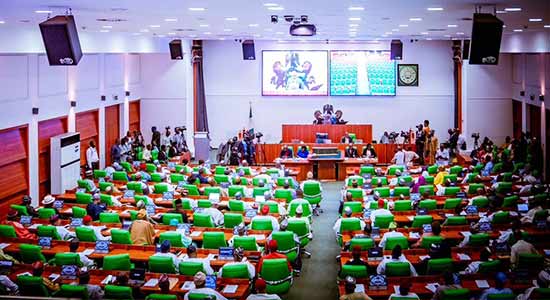
The House of Representatives Minority Caucus has formally confirmed that key provisions of Nigeria’s 2025 tax reform laws were altered in the versions gazetted and circulated to the public.
it said the alteration constitutes a breach of the Constitution and an affront to the legislature’s authority.
The confirmation, contained in the interim report of the House Minority Caucus Ad-hoc Committee on Tax Laws and made public on Friday, follows intense scrutiny of the Certified True Copies (CTCs) of the four tax reform Acts released by the House under the direction of the Speaker of the House, Abbas Tajudeen, and comparison against the earlier gazetted versions.
The CTCs, which represent the official texts passed by the National Assembly and assented to by the President, reveal material discrepancies between the versions published in the Official Gazette and those circulating before scrutiny.
The Acts under review are: the Nigeria Tax Act, 2025; the Nigeria Tax Administration Act, 2025; the National Revenue Service (Establishment) Act, 2025; and the Joint Revenue Board (Establishment) Act, 2025.
The laws came into effect on 1 January.
How the controversy began
The issue first came to public attention on 17 December 2025, when a member of the House of Representatives, Abdulsamad Dasuki (PDP, Sokoto), raised a matter of privilege during plenary, alleging that the tax reform laws recently gazetted were not the same as those passed by the National Assembly.
Mr Dasuki said his legislative rights had been breached because the content of the gazetted laws did not reflect the text that was debated, harmonised and approved by both chambers of the legislature.
According to him, after months of deliberations, public hearings and clause-by-clause consideration, the House passed the tax bills, and the Senate adopted a harmonised version before they were transmitted to the Presidency for assent.
In parliamentary debate, the Sokoto lawmaker told colleagues that he personally reviewed the gazetted copies side-by-side with the Votes and Proceedings of both chambers and the harmonised texts and found “notable differences” that he described as potentially unconstitutional and legally unacceptable.
He urged the House to have all documents laid before the Committee of the Whole for thorough comparison and corrective action.
The initial alarm sparked immediate concern within the legislature and among civil society, which questioned how texts could diverge after passage and presidential assent, a process that, under the Constitution, should produce a single, authoritative version of a law.
In response, the House Minority Caucus, in a statement issued in late December 2025, vowed to unconditionally protect the independence of the Legislature and democracy, describing any attempt to impose fake or altered laws on Nigerians as an attack on the constitutional role of parliament.
To get to the bottom of the allegations, the Minority Caucus, under the leadership of Minority Leader Kingsley Chinda (PDP, Rivers), constituted a seven-member fact-finding committee earlier this month. The committee is chaired by Afam Ogene (LP, Anambra), with members drawn from Bauchi, Oyo, Abia, Bayelsa, Kano and Nasarawa states.
A day later, the House, through its spokesperson, Akintunde Rotimi, announced that Mr Tajudeen, had directed the public release of the four tax reform Acts duly passed by the National Assembly and assented to by the president. The speaker also ordered an internal verification process and instructed the Clerk to the National Assembly to align the Acts with the Federal Government Printing Press to ensure accuracy, conformity and uniformity.
Preliminary findings: Altered provisions and versions
The Minority caucus panel, led by Mr Ogene, confirmed several alterations to the contentious Nigeria Tax Administration Act, 2025, and other Tax Reform Acts.
Among the most contentious changes identified were alterations to tax compliance reporting thresholds, the introduction of new conditions for appealing tax decisions, expanded enforcement powers for tax authorities, changes to the definition of federal taxes, and provisions mandating tax computation for petroleum operations in foreign currency.
“There were three different versions of the documents in circulation, particularly the Nigeria Tax Administration Act, 2025… The Contentious Portions, especially in the Nigeria Tax Administration Act 2025, include: i. Section 29(1): On Reporting Thresholds: While the NASS Certified version provided for a tax compliance reporting threshold of N50 million for individuals and N100 million for companies, the gazetted version lowered the reporting thresholds for individuals to (N25 million from N50 million) and (N100 million from N250 million) for companies,” the report read partly.
The committee also faulted the introduction of new subsections 41(8) and 41(9) in the gazetted Act, which imposed a mandatory 20 per cent deposit of disputed tax sums as a condition for appealing decisions of the Tax Appeal Tribunal to the High Court. It stressed that “these sections were not in the authentic version passed by NASS.”
Further discrepancies were identified in Section 64, where the gazetted version expanded the enforcement powers of tax authorities to include arrest through law enforcement agencies and the sale of seized assets without a court order. These powers, the committee said, were absent from the authentic legislative version.
In Section 3(1)(b) on the definition of federal taxes, the committee observed that the gazetted Act removed petroleum income tax and Value Added Tax from the list of taxes under federal administration, contrary to the version passed by parliament. It described this as an affront to the National Assembly’s exclusive legislative powers.
Similarly, the committee said Section 39(3) of the gazetted Act unlawfully mandated tax computations for petroleum operations in US dollars, whereas the version passed by lawmakers prescribed computation in the currency of the transaction.
The committee also raised concerns about alterations in the Nigerian Revenue Service (Establishment) Act, particularly Sections 30(1)(d) and 30(3), which relate to parliamentary oversight. According to the report, the authentic version passed by the National Assembly empowered parliament to summon the revenue service, demand reports and enforce accountability through quarterly and annual reporting.
READ ALSO: CPPE warns against sugar tax, cites threat to manufacturing, jobs
These provisions, the committee said, were curiously deleted from the gazetted version, undermining the doctrine of checks and balances.
Given the scale of the discrepancies and what it described as “illegalities and impunity” that undermine the authority of the legislature, the committee said the evidence so far justifies a deeper investigation.
It therefore requested an extension of time to conduct a more comprehensive probe aimed at ensuring accountability for what it termed an affront to the National Assembly and Nigeria’s democratic order.
-premiumtimesng
