
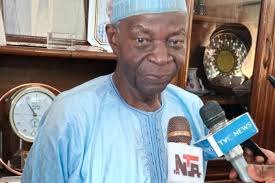
Former President of the Court of Appeal, Justice Ayo Salami (retd), has faulted the current process of appointing judges in Nigeria, warning that it is weakening the judiciary due to what he described as limited professional exposure among many appointees.
Mr Salami, who spoke in Ilorin, Kwara State, on Tuesday after receiving the 2025 Human Rights Defender Award from the Wole Soyinka Centre for Investigative Journalism (WSCIJ), said appointments to the High Court now appear to be treated largely as a promotion avenue for magistrates.
According to him, the trend undermines the quality of justice delivery, as many appointees lack the broad legal experience required for the bench.
He recalled that during the tenure of Justice Taslimi Elias as Chief Justice of Nigeria, the appointment of magistrates to the High Court was discouraged in order to preserve standards.
“A magistrate is master of his court, but the exposure is limited. State counsel and private practitioners appear before different courts and gain wider experience necessary for judicial work,” he said.
Mr Salami stressed that the weakness in the judiciary is not necessarily due to corruption, but largely due to insufficient capacity arising from poor appointment standards.
The retired jurist urged judges to be courageous and steadfast in the discharge of their duties, especially in politically sensitive cases.
“Courage is the basis of justice. If you don’t have courage, you can’t do justice,” he said, adding that judges must remain patriotic and committed to truth at all times.
He declined to advise politicians directly but maintained that judicial officers must uphold integrity irrespective of external pressure.
On the recurring debate over ownership of electoral mandates, Mr Salami said the mandate rests with the electorate.
“The voters own the mandate. They gave it to you to represent them,” he stated.
He, however, noted that the issue of defections remains legally complex, noting that lawmakers who defect may retain their seats only where there is a division within their political parties.
Mr Salami also raised constitutional concerns about the participation of some candidates in the 2023 general elections, insisting that the law does not recognise independent candidacy.
He referenced the case of Labour Party’s presidential candidate, Peter Obi, questioning the legality of his emergence after leaving the Peoples Democratic Party (PDP), and suggesting that such issues could affect the competence of election petitions.
The former appellate court president expressed gratitude to the Wole Soyinka Centre for Investigative Journalism (WSCIJ) for the award, describing it as a significant recognition.
“I’m very happy and grateful to the organisation,” he said.
Reflecting on his career, Mr Salami said late Obafemi Awolowo influenced his decision to study law after witnessing his resolve to defend himself in court during a political dispute.
He also recalled the prosecution of Nobel laureate Wole Soyinka during the Western Region crisis as one of the early events that shaped his belief in standing firmly on principle.
Mr Salami reiterated that justice requires not only knowledge of the law but also the courage to apply it fairly and without fear.
